•
Guest Commentary: When prayer becomes protest, we’ve missed the point
Imagine what might happen if every city and county commission meeting began with a simple reminder: We are here to make life better for everyone, including those with whom we disagree.
Unfortunately, a recent incident in Bartow demonstrated how even prayer can become a source of division. Christians disrupted a city commission meeting in protest of an invocation by a Muslim imam.
What struck me was that people on both sides apparently believed they were defending respect. The protesters believed they were protecting their Christian faith and traditions. Those supporting the imam believed they were protecting religious freedom and the dignity of someone whose beliefs differed from their own.
Both believed they were standing for something important. But surely we can agree that the way we defend our beliefs should reflect the best of those beliefs.
I’ve been a Christian pastor for more than five decades, and I love my Savior deeply. I want people to know Jesus and experience the love that has transformed my life. But I’ve learned that people are much more likely to be drawn to Christ by the way Christians love and serve than by how loudly we proclaim our beliefs.
We hear a lot these days about conservative Christianity, progressive Christianity, and political Christianity. I’d like us to recover something much more compelling: practical Christianity.
Practical Christianity is demonstrated through feeding hungry families, helping children succeed, caring for vulnerable neighbors, and building communities where everyone has the opportunity to flourish. It’s not about which religion gets the microphone. It’s about whose lives are made better because we practice what we believe. I don’t want less Christianity in public life. I want more of the Christianity Jesus actually taught — the kind that loves generously, serves humbly and makes communities better for everyone.
And isn’t that what our local governments are supposed to be doing as well?
People come to commission meetings concerned about housing, roads, public safety, schools and the wise use of public resources. They want their representatives to work together for the common good, not become distracted by contests over religious or political power.
Our Constitution provides a wise framework for navigating these differences. The First Amendment both prohibits government from establishing religion and protects the free exercise of religion. Neither principle should cancel the other. Government shouldn’t favor one faith over another, but neither should religious expression be unwelcome simply because it comes from a particular tradition.
The Supreme Court has recognized the longstanding tradition of legislative prayer. Done well, an invocation reminds everyone present that public service is a sacred responsibility, whether or not they share the same understanding of the sacred.
There are different ways to accomplish that.
The City of Oviedo, for example, begins with a moment of silence. Everyone is free to pray, reflect, or simply prepare themselves for the work ahead. No one is excluded.
Other communities may choose to continue inviting representatives of different faith traditions to offer invocations. I appreciate that tradition, too. Asking for wisdom from above, or seeking a perspective greater than our own, can help us remember that we serve an entire community, not merely those who think or worship like us.
Either approach can work beautifully when the purpose is service rather than religious superiority.
I was especially saddened that the Lord’s Prayer was used to prevent another person’s prayer in Bartow. Jesus gave us those words to bring us closer to God, not to use as a weapon against another person’s faith. When we pray, “Thy kingdom come, Thy will be done,” we are surrendering our desire for control, not asserting it.
The Central Florida Pledge invites us to make this commitment: “I will lead by example — treating all people with dignity and respect, especially those with whom I disagree.”
That doesn’t ask anyone to abandon their convictions. It asks us to live them in ways that honor the dignity of others.
The most meaningful invocation is not the one that makes the strongest statement about our religious identity. It is the one that prepares us to seek wisdom, honor our neighbors, and get to work making life better for everyone. After the prayer is over, the real measure of success is what we accomplish together.
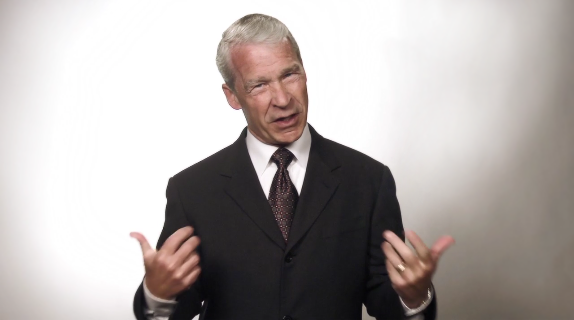
Joel C. Hunter is a pastor and chairman of the Central Florida Pledge.